ORGANS OF PARIS © 2026 Vincent Hildebrandt HOME ALL ORGANS




A2
In 1881, a first instrument was installed by Eugène and
John Abbey (organ builders of English origin). This organ
had 21 stops distributed over two manuals, as well as a
pedal division of 4 stops borrowed from the manuals.
The action was mechanical, assisted by a Barker machine.
Having fallen into very poor condition, it was completely
transformed and restored in 1964 by the firm Müller.
Several stops were thus modified or even replaced,
adopting a more neo‑classical aesthetic. A new
mechanical action (without a Barker machine) was
installed, together with an independent pedal of 5 stops
on mechanical action.
1979–1980
The instrument part was rebuilt by the organ builders
Benoit and Sarelot.
•
Construction of a rear‑positioned positive case and
four speaking divisions: Positif, Grand‑Orgue, top of
the classical Récit and Pédale.
•
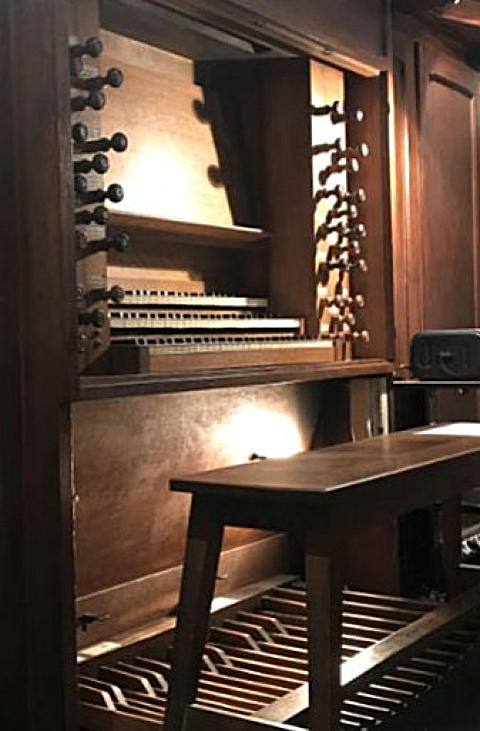
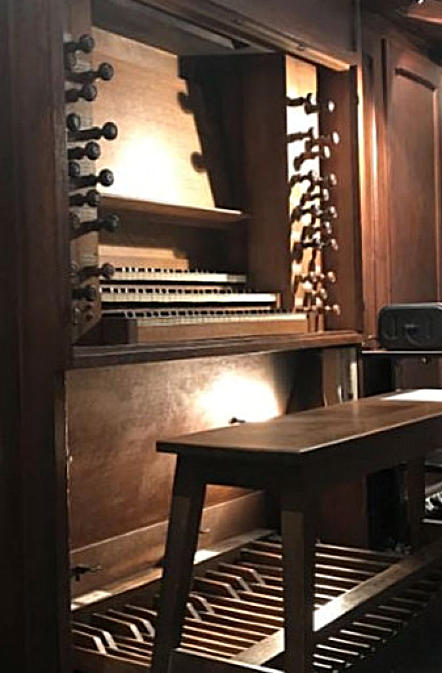
A new console installed in a window.
•
A new action.
•
A new blower.
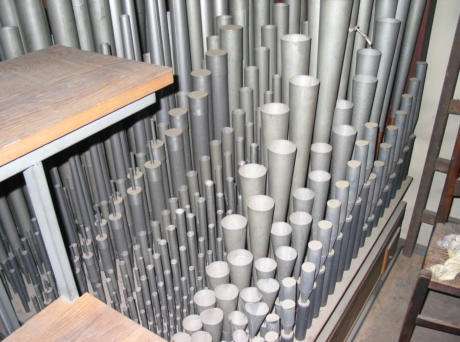
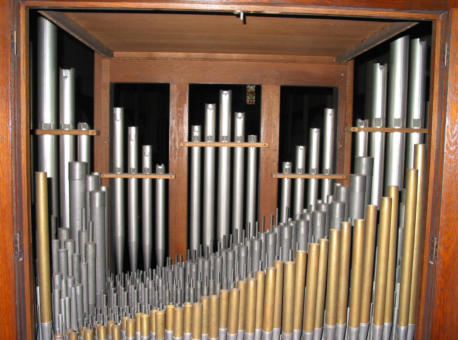
The pipework from the earlier instrument was reused
after being revoiced in a neo‑baroque style.
Brochure inauguration
This is a chapel dedicated to Saint Henry that once
allowed the Catholics of the neighborhood to attend
services. In 1874, as the population had grown too large,
the Archdiocesan Council decided to create a new parish
in the Picpus‑Bel Air district. The land was purchased
with private funds by a benefactress of the parish, who
also covered the construction costs. The building,
dedicated to the Immaculate Conception, was completed
in 1875 from plans by the architect Édouard Delebarre
de Bay.
The church’s style is Romanesque in inspiration. The
chancel was enriched by beautiful paintings by the artist
Victor‑Casimir Zier, whose works can also be seen at
Saint‑Roch and Saint‑Louis des Invalides. Fine
stained‑glass windows, depicting in particular a series of
saints and blesseds, decorate the nave and the chancel.
Finally, on the right transept side, one can admire a
magnificent neogothic pulpit showing Christ teaching,
with King David to his right and Moses to his left.


1881 - Abbey (1)
1965 - Müller (3a)
1980 - Benoit et Sarelot (3)
II/33 (31) - transmission mécanique
stoplist
Titular organist
Etienne Desaux
Famous organists in the past: Auguste Schirlé
Parish website
Audio
Auguste Schirlé Max Reger Te Deum
Photos
Buffet : Jeroen de Haan
Console et tuyauterie : Thierry Correard
Eglise : Vincent Hildebrandt








Organs of Paris


ORGANS OF PARIS © 2026 Vincent Hildebrandt
A2
In 1881, a first instrument was installed by Eugène and John
Abbey (organ builders of English origin). This organ had 21
stops distributed over two manuals, as well as a pedal
division of 4 stops borrowed from the manuals. The action
was mechanical, assisted by a Barker machine.
Having fallen into very poor condition, it was completely
transformed and restored in 1964 by the firm Müller. Several
stops were thus modified or even replaced, adopting a more
neo‑classical aesthetic. A new mechanical action (without a
Barker machine) was installed, together with an independent
pedal of 5 stops on mechanical action.
1979–1980
The instrument part was rebuilt by the organ builders Benoit
and Sarelot.
•
Construction of a rear‑positioned positive case and four
speaking divisions: Positif, Grand‑Orgue, top of the
classical Récit and Pédale.
•
A new console installed in a window.
•
A new action.
•
A new blower.
The pipework from the earlier instrument was reused after
being revoiced in a neo‑baroque style.
Brochure inauguration

1881 - Abbey (1)
1965 - Müller (3a)
1980 - Benoit et Sarelot (3)
II/33 (31) - transmission mécanique
stoplist
Titular organist
Etienne Desaux
Famous organists in the past: Auguste Schirlé
Parish website
Audio
Auguste Schirlé Max Reger Te Deum
Photos
Buffet : Jeroen de Haan
Console et tuyauterie : Thierry Correard
Eglise : Vincent Hildebrandt